Investing in African aquaculture has never been more relevant. As aquaculture is now the world’s fastest-growing food sector according to the FAO, Africa — which accounts for only 1.9% of global production — offers a high-potential investment landscape, supported by strong domestic demand growth and increasing commitment from international donors.

Why investing in African aquaculture makes sense: an undersupplied market
The first reason for investing in African aquaculture is straightforward: the continent massively imports what it could produce itself. Côte d’Ivoire is the most striking example: with annual consumption exceeding 640,000 tonnes of fish, the country currently imports 82% of its fishery needs, even though its 2024 national mapping already identifies 1,076 fish farms and more than 11,000 farming structures on its territory.
This paradox is found across the continent and illustrates why investing in African aquaculture represents a structural opportunity. West Africa produces 32% of Africa’s fisheries and 21% of its aquaculture output, while remaining far below its potential. Every tonne of fish produced locally replaces an import, improves the trade balance and creates added value within the territory.
6 concrete reasons to start investing in African aquaculture now
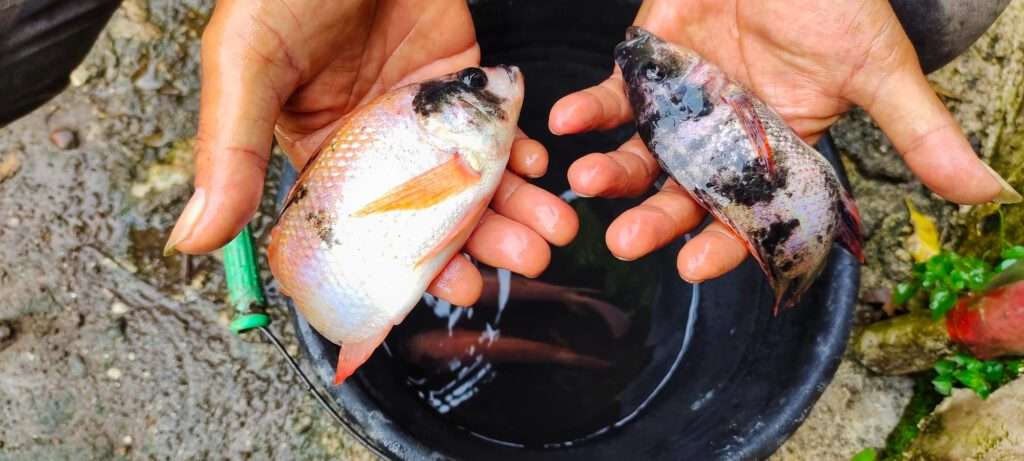
- Tilapia pond farming. Investing in African aquaculture often begins with tilapia. The dominant species in sub-Saharan Africa, it features a short production cycle (6 to 8 months), strong local demand and accessible setup costs. Egypt produces around 1.1 million tonnes of tilapia in 2024, proving the industrial viability of this sector at scale.
- Local aquaculture feed production. Fish feed accounts for 60 to 70% of production costs and is still largely imported. Investing in the local manufacture of pellets from African raw materials (soy, local fishmeal) represents a high-value-added niche with rapid profitability.
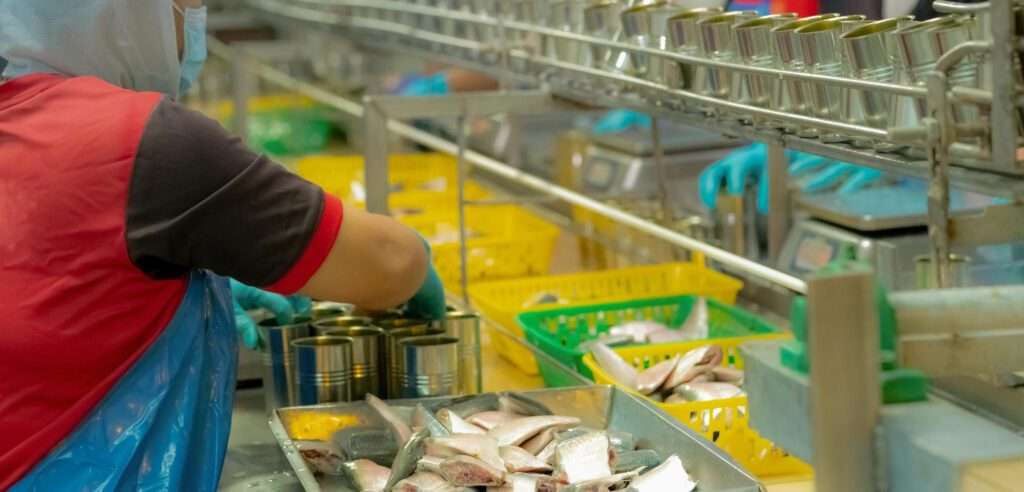
- Cold chain and logistics. Post-harvest losses reach up to 40% in some areas due to insufficient cold chain infrastructure. Investing in cold storage units, refrigerated trucks or processing centres is a direct lever for reducing losses and increasing marketable value.
- Recirculation aquaculture systems (RAS). These technologies enable fish production in a controlled environment, independent of climatic conditions or water availability. Although requiring a higher initial investment, RAS delivers superior yields and adapts to urban and peri-urban areas.
- Training and technical advisory services. The dissemination of good farming practices remains insufficient across the continent. Investing in training centres, agronomic advisory services or digital support platforms for producers meets a real need and creates a sustainable business model.
Institutional players supporting investment in African aquaculture
Investing in African aquaculture today benefits from unprecedented institutional backing, which significantly reduces risks for private investors.
The African Development Bank (AfDB) is the key player in public sector financing. It has injected more than one billion dollars into African aquaculture and fisheries in recent years. Its programme in Cameroon, co-financed with the State, includes a guarantee fund and a refinancing fund operationalised in 2024 to facilitate producers’ access to credit.
The World Bank is also strongly committed through its AquaInvest Platform programme, which aims to disseminate best aquaculture investment practices. It notably supports the simplification of regulatory frameworks and the mobilisation of private financing through the International Finance Corporation (IFC).
The FAO provides technical support in several West African countries, as in Côte d’Ivoire at the Selab Fisheries Expo 2025, where it charted the path towards sustainable aquaculture and offered investors an information platform on available financing opportunities.
ECOWAS adopted in 2019 a regional strategic framework for the sustainable development of fisheries and aquaculture (CSDD PAD), which creates a favourable policy environment for sub-regional investment and promotes coordination between member states.
Favourable regulatory frameworks for investing in African aquaculture
One of the historical challenges for investing in African aquaculture has been the instability or complexity of regulatory frameworks. The trend is reversing. Several countries have undertaken significant reforms.
Senegal adopted in 2023 a ten-year national strategy with clear commitments on authorisations, water concessions and tax incentives for private investors.
Morocco offers the continent’s most advanced example: VAT exemptions on aquaculture inputs, customs duties reduced to 2.5% on fish feed, and 16 calls for expressions of interest having selected more than 415 aquaculture projects. Result: 183 aquaculture farms were launched in the first half of 2025, mobilising $142.6 million in investment.
Tunisia shows a spectacular rise: private investment in aquaculture tripled between 2024 and 2025, rising from $9 million to $30.7 million, now representing 17% of the country’s total private agricultural investment.
Risks to know before investing in African aquaculture
Investing in African aquaculture requires identifying the sector-specific risks clearly.
Health risk. Mortalities linked to diseases (bacterial, parasitic, viral) can destroy a production in just a few days. The absence of specialised aquaculture veterinarians in many countries aggravates this risk.
Input supply risk. Dependence on imported feed exposes producers to exchange rate fluctuations and logistical disruptions. Any investment without an integrated local supply strategy remains vulnerable.
Regulatory risk. Despite progress, some countries still lack clarity on water use rights, concessions and sanitary standards applicable to exports.
Market risk. Farmed fish must compete with imported wild-caught fish, often subsidised. A thorough market analysis is essential before any investment.
Towards a mature and attractive sector
Investing in African aquaculture today means positioning oneself on a market in a structuring phase, before returns are reduced by the mass arrival of competitors. Aquaculture represents a valuable opportunity to stimulate employment, particularly in rural areas, for youth and women — a compelling argument for impact investors and development funds.
The combination of strong domestic demand growth, increased institutional support, improving regulatory frameworks and increasingly accessible technology creates favourable conditions rarely found together in a single sector. Investors who commit now are contributing to building a strategic sector for the continent’s future.
Discover the SIAq 2026 Investment page to learn more about sector opportunities in Dakar.
Sources : FAO — The state of world fisheries andaquaculture 2024 (SOFIA) · world Bank — AquaInvest Platform (2024) · African Development Bank (AFDB) · ECOWAS policy Framework CSDD PAD (2019) · Agence Ecofin · African Aquaculture Business Leaders Network (AABLN) · AIP Côte d’ivoire (September 2025).