Aquaculture in West Africa is today at a decisive turning point. As global production from aquatic farming exceeded that of capture fisheries for the first time in 2022, the West African region — rich in natural resources and driven by a rapidly expanding population — remains one of the most underexploited areas of potential on the planet.
An underrepresented continent in global production
Global aquaculture production reached 130.9 million tonnes of aquatic animals in 2022, according to FAO’s SOFIA 2024 report. Africa as a whole accounts for only 1.9% of this total, with around 2.3 million tonnes produced — of which nearly 70% comes from Egypt alone, the continent’s leading producer.
Yet since 2000, Africa’s aquaculture sector has grown by more than 455%, according to the FAO. This impressive figure conceals a more nuanced reality: growth is concentrated in a few countries, and aquaculture in West Africa today accounts for around 16% of continental production, behind North Africa but ahead of East Africa.
West Africa: a contrasting picture
Nigeria, the driving force of aquaculture in West Africa
Nigeria is by far the leading producer in sub-Saharan Africa and the engine of West Africa’s aquaculture dynamics. The country produces around 152,000 tonnes annually and owes its performance to intensive tilapia and catfish (Clarias gariepinus) farming in ponds — a technique well mastered by a structured private sector.
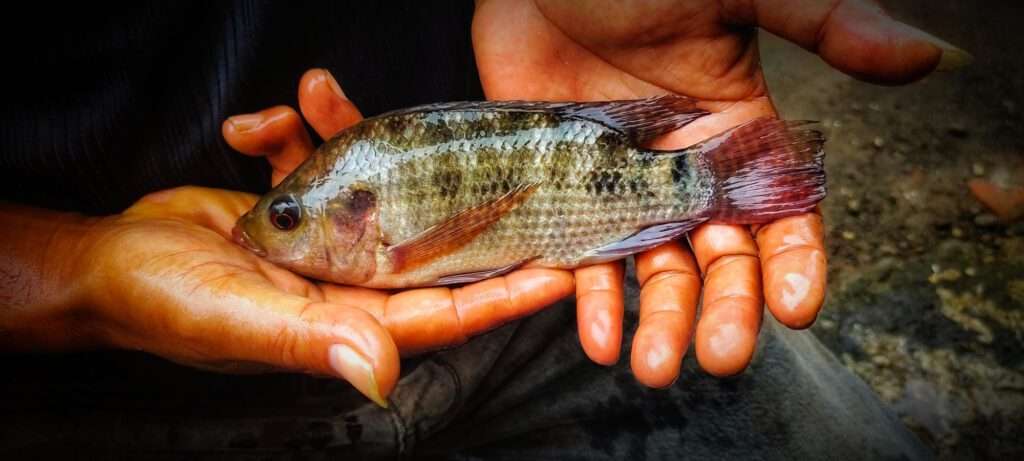
Nile tilapia (Oreochromis niloticus) and catfish together account for 70% of sub-Saharan Africa’s aquaculture production volume — species well adapted to local climatic conditions, fast-growing and well received by regional markets.
Ghana, a model of sector structuring for aquaculture in West Africa
Ghana produces around 7,150 tonnes per year, a still modest share, but the country stands as a benchmark for sector structuring: aquaculture already accounts for 17% of the national total fish supply. The Ghanaian government launched a $27 million programme in 2023 to strengthen seed production — a key step towards industrialising fish farming.
Rabobank and the Global Seafood Alliance also identify Ghana among the five new aquaculture growth drivers in Africa for 2024–2025, alongside Nigeria, Uganda, Zambia and Zimbabwe.
Senegal, an immense and still untapped potential
Senegal perfectly illustrates the paradox of aquaculture in West Africa: more than 500 km of coastline, a dense hydrographic network, climatic conditions favourable to the farming of many marine and freshwater species — and yet aquaculture production barely exceeds 1,500 tonnes per year, less than 1% of the national total fish supply.
In response, Senegal adopted in 2023 a ten-year national aquaculture development strategy (2023–2033), endowed with 129 billion CFA francs (approximately 197 million euros). The stated objective is ambitious: to reach 68,000 tonnes of aquaculture production by 2032. A dedicated aquaculture hub is planned at Ndiaganiao, in the Thiès region, built on a public-private partnership.
Côte d’Ivoire, between ambition and structuring
Côte d’Ivoire currently produces around 5,000 tonnes per year, mainly tilapia in ponds. But its ambitions match its hydrographic potential: the country targets 68,000 tonnes by 2031. An aquaculture inter-professional organisation was established in 2023 to unite private stakeholders and accelerate dialogue with the State.
The species at the heart of the sector
Aquaculture in West Africa is based on two dominant species:
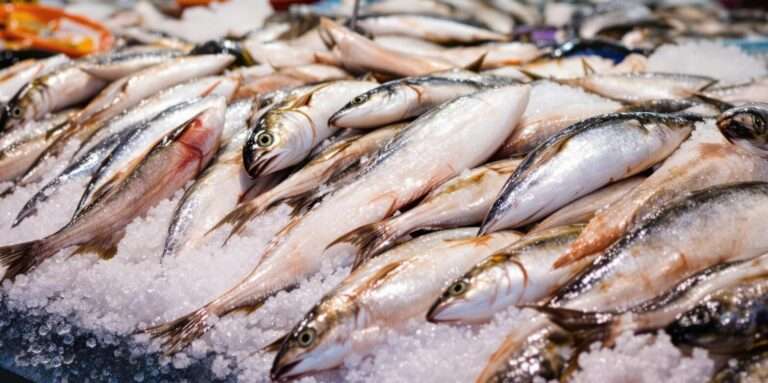
- Nile tilapia (Oreochromis niloticus): the queen species of African fish farming, prized for its rapid growth, disease resistance, ease of farming and excellent reception in local markets.
- African catfish (Clarias gariepinus): highly valued for its ability to feed on locally available organic matter, which reduces feeding costs and makes it accessible to small producers.
Other species are being developed — notably oysters in Senegal’s Sine-Saloum delta, shrimps and certain marine species — but their production remains marginal and essentially experimental.
Structural challenges to overcome
Despite real potential, the development of aquaculture in West Africa faces several structural obstacles.
Access to inputs. Fish feed accounts for 60 to 70% of production costs in intensive aquaculture. Most of this feed is currently imported, exposing producers to exchange rate fluctuations and supply disruptions.
Financing. Access to credit remains difficult for the majority of aquaculture farmers, often SMEs or artisanal producers. Commercial banks perceive the sector as risky, due to a lack of reliable data on farm profitability.
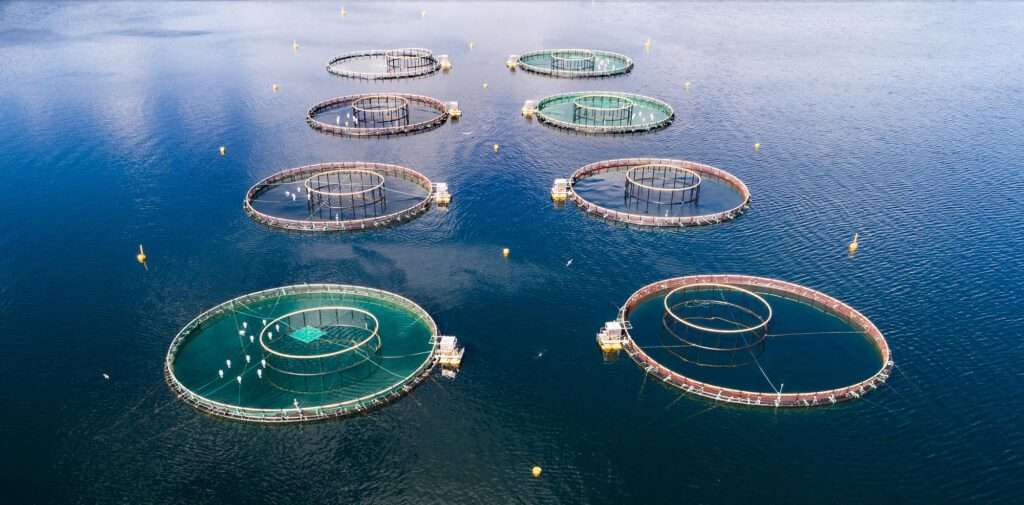
Technology transfer. Advanced farming techniques — recirculation systems (RAS), offshore cages, automated feeding — are still not widespread in the region. Training technicians and disseminating best practices remain major challenges.
Regulatory frameworks. Aquaculture legislation is being modernised in several countries (Senegal, Côte d’Ivoire, Ghana), but authorisation procedures remain complex and poorly harmonised at the sub-regional level.
Encouraging prospects for aquaculture in West Africa
To accelerate aquaculture in West Africa, the FAO estimates that targeted policies, structured technology transfer and responsible investment could radically transform the situation for Africa. Global projections indicate that consumption of aquatic products is expected to reach 21.3 kg per capita by 2032 — increasing pressure on wild fishery resources that are already overexploited.
In this context, aquaculture in West Africa is no longer an option: it is becoming a strategic necessity to ensure food security in a region whose population is expected to double by 2050. With its water resources, coastlines and rapidly growing domestic demand, the region has all the assets to become a leading aquaculture hub — provided that investments are accelerated, skills strengthened and supply chains structured.
SIAq 2026 is precisely part of this dynamic, bringing together the sector’s key players in Dakar. Find out how to participate as an exhibitor.
Sources : FAO — The state of world fisheries andaquaculture 2024 (SOFIA) · Rabobank / Global Seafood Alliance (2023) · Department of Fisheries of Senegal · Ministry of Animal Resources and Fisheries in Côte d’ivoire.